
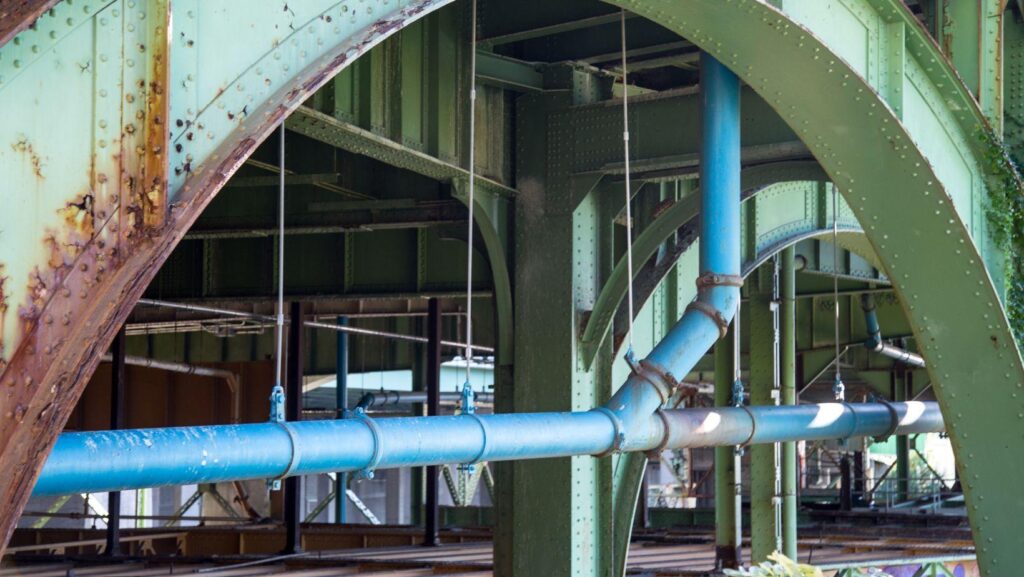
Americans drive on highways and cross bridges every single day, assuming these structures are safe. The reality is far more alarming. Neglecting infrastructure such us those in Camden County has become an active hazard that drains our wallets and ultimately costs lives.
The economic burden alone is staggering. According to the American Society of Civil Engineers, “Failing to act to rebuild America’s infrastructure costs every American family $3,300 a year, with significant costs and consequences to the national economy.” But dollars and cents only tell a fraction of the story.
The true price of deferred maintenance goes far beyond financial charts and economic forecasts. We pay this price in preventable fatal accidents that tear families apart.
The Hidden Toll of America’s Crumbling Infrastructure
It is easy to look at infrastructure reports and see abstract numbers. Trillions of dollars in investment gaps can feel disconnected from daily life. The human consequences of these unmaintained roads are very real and deeply tragic.
Traffic fatalities remain a persistent crisis on US roadways. In the first half of 2024, an estimated 18,720 people died in motor vehicle traffic crashes in the United States. While driver behavior plays a role in these statistics, dangerous and decaying road conditions are a significant, often overlooked factor.
When poorly maintained highways and bridges lead to catastrophic accidents, families are left devastated. Surviving relatives face sudden emotional trauma alongside immediate financial ruin from medical bills, lost wages, and the permanent loss of companionship. These cases involve strict government filing deadlines, complex liability laws, and multiple potentially responsible parties that most families are simply unaware of. Camden County lawyers who handle fatal accident cases across the full range of causes, from infrastructure failures and trucking crashes to workplace accidents and medical negligence, know how to investigate what truly happened and ensure every avenue for accountability is pursued on a family’s behalf.
You do not have to accept a preventable tragedy as a mere accident. Taking legal action shifts the burden back where it belongs.
How Poor Road Conditions Cause Fatal Accidents
Deferred maintenance creates active hazards that directly trigger catastrophic passenger and commercial vehicle crashes. Massive potholes can cause sudden tire blowouts or force drivers to swerve into oncoming traffic. Missing or damaged guardrails fail to stop vehicles from leaving the roadway. Malfunctioning traffic signals create deadly intersections, and structural bridge decay can lead to unthinkable collapses.
These specific infrastructure failures are not isolated incidents. The American Society of Civil Engineers reports that more than 40% of the U.S. road system is currently in poor or mediocre condition.
These hazardous conditions turn especially deadly when commercial vehicles are involved. Massive semi-trucks require smooth, predictable surfaces to brake and maneuver safely. Along heavily congested transport routes like I-676 and I-76, a single uneven lane shift or unpatched pothole can cause an 80,000-pound truck to jackknife.
The scope of this neglect is massive. The ASCE estimates a $2.7 trillion investment gap in deferred maintenance. This proves these dangerous road conditions are a systemic failure, not just a streak of bad luck for drivers.
Who is Legally Responsible When Public Infrastructure Fails?
When a devastating crash happens, investigators often look at the drivers first. There is a common misconception that Camden County traffic accidents are always the fault of someone behind the wheel. The truth is that state and local government agencies hold direct liability for creating or ignoring unsafe driving conditions.
Cities, counties, and state transportation departments have a legal duty to keep roadways reasonably safe. However, suing the government involves a legal concept called “sovereign immunity.” In simple terms, the government has laws that protect it from being sued for every minor mistake.
Thankfully, the law carves out specific exceptions for severe negligence. If a public entity knew about a dangerous pothole, a broken signal, or a degrading bridge and did nothing to fix it, they lose that immunity.
Proving this exact liability requires aggressive, evidence-driven investigations. Lawyers must immediately secure commercial truck “black box” data, analyze initial police reports, and hire accident reconstruction experts. This evidence proves the road condition caused the crash, defeating the government’s standard defense of blaming the driver.
The Legal Process for Holding Government Entities Accountable
Navigating a claim against a public entity is vastly different from a standard car accident claim. If another driver hits you, you deal with a private auto insurance company. If the county road department’s negligence causes a fatal crash, you enter a highly regulated legal maze.
To file a wrongful death lawsuit, the family must legally appoint a “Personal Representative” of the victim’s estate. This process happens through the Surrogate’s Court and must be completed before any legal action can formally begin against the government.
The differences between these two paths are significant.
|
Feature |
Standard Personal Injury Lawsuit |
Government Tort Claim |
|
Defendant |
Private Individual / Insurance Company |
City, County, or State Agency |
|
Filing Deadline |
Typically 2 Years (Varies by State) |
Strict 90-Day Notice Requirement |
|
Immunity Protections |
None |
Sovereign Immunity applies |
|
Damage Caps |
Based on Insurance Policy Limits |
Often capped by specific state statutes |
Taking on a massive government agency sounds financially intimidating for a grieving family. Reputable Camden County law firms operate on a strict contingency fee basis. This means the family pays nothing upfront, and the attorneys only get paid if they secure a successful settlement or verdict. This removes all financial risk from the family’s shoulders.
The biggest hurdle families face when fighting public entities is a strict legal deadline known as “The 90-Day Trap.”
Under laws like the New Jersey Tort Claims Act, families do not have the standard two-year window to file a lawsuit. The government requires immediate notification that you intend to pursue a claim for damages.
You must file a formal “Notice of Claim” against the responsible public entity within a strict 90-day window from the date of the accident. This document must clearly state the facts of the incident, the nature of the injuries, and the specific government agency you believe is at fault.
The consequence of missing this 90-day deadline is severe. If you fail to file the notice in time, you lose the right to seek justice and financial recovery entirely. The court will almost certainly dismiss your case, leaving your family with no legal recourse.
How Civil Litigation Forces Systemic Public Accountability
Filing a wrongful death lawsuit is deeply personal, but its impact extends far beyond your own family. These cases are powerful tools for public accountability.
When a family successfully sues the government, they recover “pecuniary” or financial losses to secure their future. More importantly, they deliver a direct financial penalty against the government agency responsible for the neglect.
Bureaucracies respond to financial pressure. Successful litigation forces public entities to fix unmaintained infrastructure. When ignoring a dangerous intersection or a degrading bridge costs a county millions of dollars in a lawsuit, they finally allocate the budget to address those deferred maintenance hazards.
Taking legal action transforms a family’s private grief into a broader public mission. By holding negligent agencies accountable, you protect the community and ensure those specific roadways are made safer for everyone else.
Conclusion
The true cost of ignoring our public infrastructure is paid in human lives. While failing roads cost the economy billions, the ultimate price is exacted on the families torn apart by preventable fatal accidents.
City and state governments have a fundamental duty to maintain safe roads and bridges. When they fail in that duty, surviving families have the power to step up and hold them accountable. The process is complex and the laws heavily favor the government, but justice is entirely possible with the right approach.
Remember that time is your biggest enemy. The strict 90-day filing deadline to submit a Notice of Claim is a trap designed to protect negligent public agencies. You must act quickly to preserve your right to a fair investigation and eventual compensation.